Pennsylvania.howLiving here
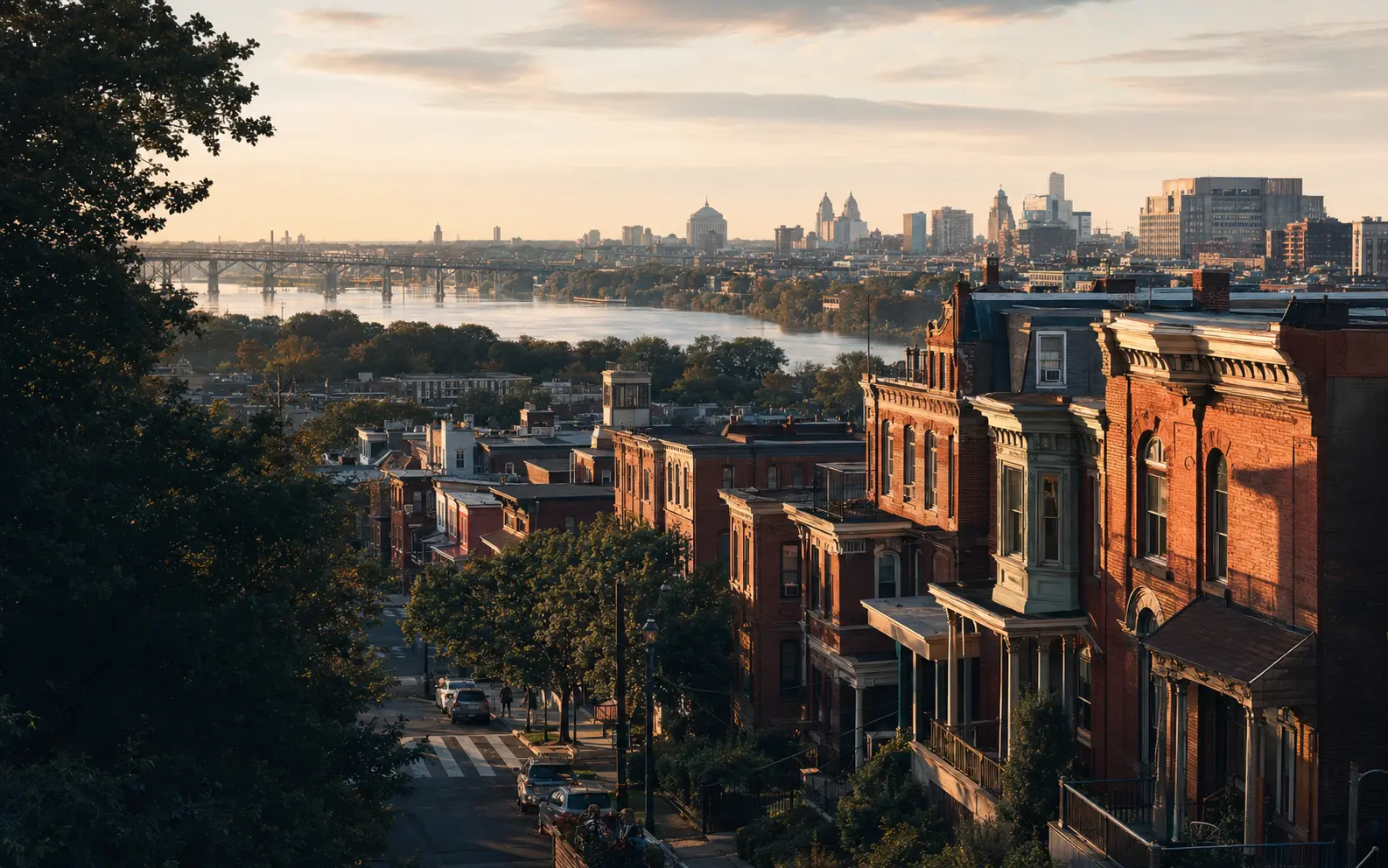
Conceptual editorial view of Philadelphia rowhouse blocks descending toward a river
39.9526° N · 75.1652° W

The dense eastern metropolis

01 / 09

Philadelphia

Blocks, river edges, and a city still arguing with history.

Read the terrain

Why this chapter

Come for founding-era institutions, then stay for the block-by-block city: markets, murals, small museums, rowhouse neighborhoods, immigrant foodways, Black cultural history, and two rivers.

Pace
Fast, neighborhood-first, walkable in chapters
Best for
Travelers who like to walk, eat across neighborhoods, use transit, and let a big city reveal itself in layers rather than through one landmark loop.
What surprises
How green the city can feel once Fairmount Park, the Wissahickon, river trails, and neighborhood tree canopies enter the itinerary.
01 · Orientation

Read the map before the list.

Center City sits between the Delaware and Schuylkill rivers. Numbered streets run north–south; many named streets run east–west. The subway, trolley, regional rail, buses, walking, and biking each solve different parts of the city.

02 · Daily life

What it feels like

Philadelphia is direct without being simple. Blocks matter, corner stores matter, and neighborhood identity can be more useful than a broad compass direction.

Blocks, river edges, and a city still arguing with history.
Stay by need

Pick the base that removes friction.

  1. Center City for a first visit and the easiest walk-to-everything base.
  2. Old City for early-American streets with quick river access.
  3. Fishtown or East Passyunk for restaurants, independent shops, and a more residential evening.
Compare statewide stay logic
Eat by context

Follow how the region actually eats.

  1. Treat Reading Terminal Market as an orientation lesson, not a single-meal checklist.
  2. Follow neighborhood food corridors through South Philadelphia, West Philadelphia, Chinatown, and the Northeast.
  3. Leave room for bakeries, roast pork, water ice, regional pretzels, and the city’s deep vegan and immigrant kitchens.
Open the food field guide
Do with enough time

Three ways into the chapter.

  1. Walk the Delaware riverfront, then cut west through the street grid.
  2. Pair a major institution with a small neighborhood museum or artist-run space.
  3. Use the Schuylkill River Trail to see the city shift from civic core to green corridor.
Browse by experience

Seasonal tradeoff

Spring and fall make long walking days easiest. Summer is lively and humid; winter can be raw, but museums, markets, and neighborhood dining carry the city.

Local respect

Do not block a rowhouse stoop, bike lane, or narrow market aisle. Ask before photographing people. Read the room before repeating the city’s own jokes back to it.

Keep crossing the state

Nearby in spirit

02PittsburghThree rivers, ninety neighborhoods, and no truly flat explanation.03EriePennsylvania opens to a lake horizon.04PoconosLakes, river gaps, hemlock shade, and four-season escape velocity.